Canada is Free and Freedom is Its Nationality

Sir Wilfrid Laurier

Sunday, November 15, 2009

Event Blogging the Wilberforce Weekend: Assisted Suicide and Euthanasia Debate Quebec

Please Note: This is a summary of the events and speeches in my own words for educational, information, and entertainment purposes only. It is not the speakers' exact words and should not be taken as such. It also may contain errors due to the nature of the medium. I am not responsible for any of them, use at your own risk and consult the official videos and/or audio record if you want to verify or quote anything.

Dr Andre Bourque

There is an issue that this is about choice, individual autonomy. There is a breakdown of human solidarity, we don't want to be dependent on anyone else.

We claim to want to fight youth suicide, then say suicide is a right. I am a doctor, I have the privilege and responsibility to give help and not to kill people.

This is also linked to evolution. We believe that euthanasia is about progress. Old people are against progress. Young practitioners don't want to be involved in a reactionary movement.

There was a quick survey done of doctors and 75% were in favour of euthanasia. The survey results are misleading. For one thing most were specialists, not generalists. It is in light of this that myself and five colleagues decided that we needed to react. We wrote a brief from a non-religious basis, because there is a total allergy against a religion and we would have alienated many people. We wrote it in French but it reads very well in English. However some in Quebec are very impressed by the surveys.

We couldn't present a brief with just five doctors so we decided to get 100 doctors, to be a choir singing against euthanasia. We went through the lists of medical faculty and managed to get that number without too much trouble.

We got lots of visibility as the only voice speaking against euthanasia. You begin to wonder who the opposition is, where it is hiding. We didn't find doctors opposing us too much. They are there but they are hiding. The College's statement in favour of euthanasia is irresponsible. They haven't consulted their members. They are attacking a long standing tradition and there is much confusion on the matter.

They say we use palliative sedation which is the same as euthanasia. It is not the same and it is almost never used.

We are taken hostages by a minority that we don't see very often. When you have worked as long as I have you see progress over time. When I studied we did not talk about end of life issues. We have seen remarkable progress, we have improved palliative care. Students today are getting much training that I never got. There is no comparison. We have palliative care specialists for one thing.

The population does not know what we do, that we can alleviate their pain. They have fears of imposing, of pain, of so much. These fears are accentuated by the problems people have getting care and finding a doctor. People feel that they will be all alone and won't have good healthcare.
It is not easy to confront patients who are in advocacy for euthanasia because you have to look at their eyes and suffering. However these people can be badly informed, they want euthanasia because they want to die peacefully. They don't know about the alternatives.

You can stop a disproportional treatment when it gets to that point and thus die a natural death.
There is a case of a person who had a degenerative disease. He wants a "pocket coupon" for when he has to leave his home. This person seemed to be quite happy and could move around but became sick as soon as he was on camera. He probably has 10-15 years of life ahead of him.

I ask people why they don't interview others like palliative care doctors who have been working in this area for decades. These doctors create systems that work well. Someone he knows has been in palliative care for 25 years and has never had a simple request for euthanasia.

A Doctor in Quebec is a palliative care doctor who fought for euthanasia. This doctor creates disinformation. There is only one case of euthanasia in Quebec that is recognized and in that case the patient was not well treated. The patient was delirious, he had HIV/AIDS and it didn't seem possible to help so a doctor gave him a lethal injection. I was asked to help this case. This doctor was withdrawn from practice, and retrained. The doctor was not justified, he was ill informed.

The College of Doctors in Quebec brings up cases where there is agony. They believe that appropriate care could include illegal things. The Legislative framework reassures patients. The College wants euthanasia to be called medical care which is mental gymnastics.

Terminal agony is a difficult area in palliative care. Patients go through periods of anguish, but finally they go through a period of final agony where they are often in a coma. The family does suffer through this period as people are in this state for days or weeks with no or little hydration and nutrition. They have sores, they don't smell good, but they still breath and move a little. There is a temptation to end this period.

It is difficult to understand at this point why we shouldn't open the door to euthanasia.
Doctors have great power over patients. They must have a position of giving life and not death. Doctors have so much power and freedom to do what needs to be done, if they are allowed to give death it will undermine the doctor/patient relationship of trust. If they can give death it will be abused.

It is the whole question of the slippery slope and it is difficult to explain. With euthanasia the doctor/patient relationship is made dangerous. We should use the language of powerlessness.
People will be dying at home more and more. I can tell you that when we have people who are going to hospitals where they are not known they are very much at risk.

Q1 When you talk about the Quebec values that are at the root of the problem, how do we fix that?

A1 There is not enough exposure to what we do in palliative care. We need a better and more flexible system. Information about the right to refuse over-treatment. We have great tools so very few palliative care physicians are in favour of euthanasia.

Q2 The argument that there is no need for euthanasia because of palliative care lost badly in other areas. We need to show different reasons.

A2 Sees point but we still need to make the doctor/patient relationship argument better.

Q2 That didn't do much for me before euthanasia was legalized (in a state) but when my doctor actually voted for euthanasia it did affect my trust.

Q3 Some family physicians see this as part of their long tern relationship with a patient to offer euthanasia. This is very common in Holland

A3 Family physicians who are better informed in Palliative care can advise patients against euthanasia. Patients often ask doctors for advice because they are not sure what to do. Doctors have great power to persuade.

Event Blogging the Wilberforce Weekend: Plenary Session on Developing an Advocacy Campaign Strategy

Please Note: This is a summary of the events and speeches in my own words for educational, information, and entertainment purposes only. It is not the speakers' exact words and should not be taken as such. It also may contain errors due to the nature of the medium. I am not responsible for any of them, use at your own risk and consult the official videos and/or audio record if you want to verify or quote anything.

Preston Manning

The following format is the audience (A) giving answers, suggestions and Preston Manning (PM) responding, asking questions, summarizing their remarks, etc.

Suppose we were part of a campaign to oppose euthanasia and direct public action. In what context will this issue come up in Canada? The bill that is coming up is highly unlikely to pass. Physician assisted suicide will be brought through the courts, another Sue Rodriguez challenge. It will be a constitutional challenge. There is a good chance that the court will strike down the law.

What is our ultimate objective? What is the goal of a campaign to oppose euthanasia?
Is our goal to retain the current law? Change the law in such a way that we have iron clad regulation?

(A) We should phrase it positively, protection for the vulnerable.

(A) Education. People need to understand their options, legal ramifications, what help is available

(PM) That goes together

(A) It should be a multi-faceted campaign with a positive prescriptive agenda for change. We need a set of common and shared principles from religion and human rights ideas. Choose something positive that will resonate with Canadians like a charter of rights for healthcare. What sets Canadians apart from Americans is their healthcare. Support and assistance in palliative care is something that people can believe in and adopt. It would also disarm our opponents.

(A) It really doesn't matter what the law says. People who are determined to die will do it one way or another. We need a society where no one will want to die or think of dying. It makes no sense to say that alternatives are available if they are not accessible. Information and resources need to be made available.

(A) In (a state) the palliative care argument did not work against choice. However if Canadians define themselves by their healthcare, their healthcare is at risk because people will be offered Assisted suicide instead of cures.

(PM) The more focused you are on one objective the better it is. On the other hand there have been people advocating a more multi-faceted approach.

(A) A multi-track approach can work, but we must be focused on the issue. That doesn't preclude multiple ways to address the issue. We can't just focus on legal but also need legislative. We should have cases ready. We need to identify problems and address them.
Parliamentary Track
Court Track
Education/Communication
Service

(PM) We need to be clear on tracks so we can give volunteers focus and direction
(A) we need to really focus on the service track so that we have authenticity.

(A) We should develop a case ourselves for the court. We should sue for abuse. His father could have lived but because of finances and so forth it was in the interest of the doctors to kill. Wilberforce was successful because they focused on horrors and abuses. In Washington they focused on the success in Oregon and didn't talk about the horrors in Oregon

(A) We need to address the issues about finances with regard to demographics. If the system cannot bear the cost then euthanasia will happen.

(PM) Talking about finances like that could potentially hurt us.

(A) Should we have intellectual/academic track? We should support academics who must get lonely.

(PM) We should be careful about getting TOO multi track

(A) Don't politicians appoint Supreme Court justices? Why are you so pessimistic about the Supreme Court?

(PM) Based on my knowledge of the Supreme Court. They focus on equality issue when it comes to euthanasia. There is a better than 50/50 chance of they will declare it unconstitutional.

(A) Need a renewed emphasis on open debate at universities. You alienate yourself if you take a countercultural stand there. There needs to be an emphasis on the issue itself not just ad hominems.

(PM) Used to need a police escort on UofO because of bilingual stance so understands that.
How do we seize the high moral ground. Opponents say they care more about people who are suffering.

(A) Alex S. debates a lot and thinks that he does very well, but then someone wins by bringing up some horrific personal situation. Our spokespeople are most effective when they have lived the issues.

(PM) Give voice to those affected by the issues.

(A) Can we be proactive. Can this group develop a protocol to help doctors and patients who are in critical situations?

(PM) Key word is proaction. It gives authority.

(A) In terms of lawsuit we can bring forward many things. For example where people ask for care and are denied it. Redefine or define again the relationship between doctor and patient.

(PM) Legal committee should bring up 5 cases we can pursue pro-bono (laughter)

(A) We need expert resources for physicians in difficult situations. People need advice for difficult cases.

(A) In B.C. they have a toll free number that any medical personnel can access 24/7 and get a palliative care expert to give advice on any case.

(A) To gain moral high ground, we need numbers.

(PM) That is gaining democratic legitimacy.

(A) The problems are not so much palliative care as sticky ICU cases and so forth. The court cases can work against us if it is a crazy person just wanting to prolong life with ridiculous measures.

(PM) Summary: Give voice to those who are affected by these situations and we need to engage in real action.

How do we organize the campaign? Should we form a coalition? Diverse but not too diverse? National? Alternatives?

(A) There are many different groups here with many different approaches etc. If you form a prescriptive coalition people will start to bail out. Make it loose enough that individual groups and people can give the message their own flavour.

(PM) So yes, but not too prescriptive.

(A) Alex S. Coalition works when focused. When we are at a larger meeting things can fall apart when people get too divided and less focused. There must be commitment to remain focused on what they are doing. Then people from all backgrounds can be comfortable and equal.

(PM) There is difficulty maintaining focus in a multi-track

(A) We are more like a massed choir, where different choirs come together for one event then break up. We are not just one choir. When you break into workshops for example you must be committed to your workshop but may send messages to other groups. So to faith-based groups, multi-issue groups, single-issue groups can work together but stay separate.

(A) Another tool for vulnerable people is the UN charter for people with disabilities which Canada has signed.

(A) There are very distinct provincial spheres and we need to realize that and work on those levels.

(A) There are many coalitions and groups. We need to identify who is going to be our voice in different issues. And how loyal we are going to be to those voices.

(PM) Easier to get people who are directly affected

(A) We need to stay focused, don't focus on other social issues we might disagree on. We see how enemy could divide us.

(PM) We would all agree on that.

(A) This issue needs to be connected to an event.

(PM) If you are out on a surfboard you can get a hold of a wave and ride to shore. Or you could drown.

Summary: Multi-track approach but need to realize this could draw us off focus. Parliamentary, Court, Education/Communication, Service

Spokespeople who are affected. Action.

Coalition but not too prescriptive. Maintain focus. Maybe multiple coalitions. Keep an eye out for some big event.

In a real campaign strategy you would spend a lot of time and come up with a document. In the small groups we will not be discussing strategy but discussing action, how to implement the policy.

They need more people in finance sub-committee. So-cons don't like doing funding but it is absolutely vital. (They put a $5 bill on the paper to encourage signups. Didn't work) Alex S. talks about all the things they could do if they had money.

Event Blogging the Wilberforce Weekend: Advocacy Campaign Planning Meeting

Please Note: This is a summary of the events and speeches in my own words for educational, information, and entertainment purposes only. It is not the speakers' exact words and should not be taken as such. It also may contain errors due to the nature of the medium. I am not responsible for any of them, use at your own risk and consult the official videos and/or audio record if you want to verify or quote anything.

This is a simulated campaign strategy meeting. In a real meeting they would go around and ask how the meetings went. Did someone talk too much? Did you stay focused?
Somethings will need to be adjusted to different regions

The Reports

Coalition Building -

Had quite a few young people which was great to give a different perspectives.

A coalition has to include different ethnic groups and perspectives.
Needs a positive and self-explanatory name
Rights and equality based focus
Open to everyone religious, non-religious...
Guidelines for communication, discipline, clear expectations, unity in diversity, entry protocols?
Separate English/French Coalitions. Separate religious coalition? Effective communication strategy.
3 Actions to begin with:
Make a Coalition agreement
Appoint a Steering Committee
Name

Grassroots Democracy

Three tracks, legal (not grassroots), political (grassroots), medical care.
First - Education, Most people would stare off into space if you talked to them about palliative care. End of life and pain relief are easier phrases to understand.
Second - Need for regular messaging events. Demonstrations, rallies, at local to national levels.
Third - Contact MPs on this issue. Email and pre-made postcards are not much better than nothing. 1-2 paragraph personal letter with return address is great. MPs really do log and pay attention to your input.
Fourth - Involving Youth, essay and video contests. Specific outreach to campus.
Fifth - Organize speaking tours
Sixth - Make use of information technology

Ethics

Pleased to tell you that in 50min we were able to summarize the entire Western Philosophical canon (laughter).

Should be more popular than academic.
Words like justice and equality cause confusion.
Ethics is knowledge. You need to have as much info as possible to make ethical decisions. Spoke about how some things are unknowable or not yet known.
We also spoke about how the opposition subverted the use of the word choice.
As a community we should be erring on the side of life. We are caring for the living, not helping people die.
There are many international documents that we can use in our favour. They have things about the value of humanity written in secular language.
(Slogan) A positive ethic creating a caring community.
Preston Manning: Ethics should also take concern for the internal ethics of coalition as well.

Research

Would need to have two main focuses. Supplying the needs of the campaign immediately. Profile MPs, finding talking points, databases of research and organizations.
Second in the academic community to get credentialed research that fills in gaps, clinical research into how this affects vulnerable people. Research into affect on families.
In retrospect research would find it better to liaison with other groups to find out what they need.
P Manning: In the heat of a campaign find someone who already knows it rather than researching it yourself for 2 days if possible.
The worst thing that can happen is when key players get worn out so we have the ...

Spiritual Group

Had Catholics and Protestants and still got on.

The role of community is important. Support for family of campaigners as well. Campaigners can't always be there for their families and children.
Listening service, people need to talk.
Accountability
Prayer
Rest and relaxation. The need for fun.
Positive letters for encouragement.
Providing books
PM Manning: Having people who ask about and encourage you can be so good.

Organization

Our vision is to have a steering committee from all different organizations. No need for a new organization just representatives from different existing ones.
8-10 people should meet a few times a year. One part-time staff person. Different organizations contribute money and we do fund raisers.
Steering committee would have controls on finances etc. Reports to other organizations.

Formed a draft budget for one year.
Need to develop the following:
Objective for steering committee.
Short term incremental goals to keep focused.
Who is on the steering committee.
Operational protocols for problem solving.
Third-party evaluations
Volunteers, recruit specific skill sets from within different organizations. Attract specific volunteers for specific projects.
Steering committee should be delegates from, not leaders of, source organizations so they are accountable to parent organization leadership.
P Manning: Do you allow for a campaign manager. There can be fights between underlying organizations and the campaign manager when the underlying organization can't hand off the issue to the campaign manager for a campaign.
Organize - this steering committee could pick a leader. Maybe a rotating position.
In other words, don't create something new, leverage existing skills.

Funding

Wasn't too happy with the fact that Organization report involves half a million dollars. Research - easy to raise money. Spokesperson, staff, communication, legal case funding (hard to do),
How to raise money. Foundations hard to get money from. Need a groundswell of supporters. Coalition fees - membership fees. events as money raiser. Multi-face segments, fundraising from all faith communities. Web-based funding. Focus groups, Letter campaigns. Track communications. Communication media team. Phone campaigns.
Reasons for giving - personal experience with the issue, education, people who want to make a difference, networking together, need to get public exposure because people want to give to successful organizations.
P Manning: There are some problems. easier to get money for negative appeals than positive appeals. Strategic problem. More fights in coalitions over money than anything. raising and spending money are delicate.

Communications and Media

They focused on external communication and on a web campaign as the first step. Considered it as a branding exercise.
Some observations:
They (pro-euthanasia) are ahead on language, public perception
We are ahead on truth
They are ahead on faces, public figures
We are ahead on witness, stories
They are ahead on being perceived as caring
We are ahead on sanctity
They are ahead on the future, that it is "inevitable"
We are ahead on our position being the status quo
From 0-10 how well we were doing. We are 4 out of 10. we are on defence and we are behind. If you are behind you shouldn't be on defence but on offence.

Developed some slogans:
If my doctor supports euthanasia she's not for me
Kill the pain not the patient
Stop the death machine
What's the rush?
He fought for our lives should we not fight for him? The Canadian treasure box series. People as treasure not trash.
Showed some example slides.

Legal

First - Legislative. Charter. Need to uphold current law. Redefining some concepts like aid and abet, counselling. Enforcement issues. Positive proactive measures like healthcare bill of rights.

Second - Litigation, look at things like withdrawn and refusal of treatment, discrimination, interference in upcoming legal battles. Access to services.

Third - Set of legal principles. Abuse of palliative sedation. Medical futility, food and fluids. Constitutional implications in federal/provincial jurisdiction issues. Two key issues for Canadians is our healthcare and Charter

Fourth - Administrative issues and administrative bodies. Our own administration, set up advisor board, legal fund for good cases. Look at accountability for hospitals.

P Manning - If you only had $500,000 what would you focus on?

Legal - Find right test case for palliative sedation. Address medical futility and access to services. Develop principles. Accountability

Medical/Palliative

Want to stop calling it the palliative track but call it medical. Broaden to include all who need support, disabled, older people, etc.
We have stories going for us. Positive about how care has made difference. Negative about not receiving care and potential for abuse. These people don't have a choice when they are taken advantage of. Spread through new media.
Need a new name
Networking opportunities for doctors etc who get lonely. Website, web based mailing list that is uniquely Canadian. Form subgroup of coalition for medical professionals
Contact medical organizations, etc to make sure they are strong on these issues.
Get medical people involved.

Get on curriculum committees.

Get team for specific issues. Little SWAT teams of five people, lawyer, doctor, etc. give 3 minute presentation each to MPs.
Lack of education makes people afraid. Or they have small fear of loosing control, we need to replace with the big fear of euthanasia making you loose control.
Remembering heritage we have. A cultural green, our heritage is like an old growth forest. You can cut it down in a few minutes but it takes hundreds of years to grow.
P Manning: You will notice that communication runs through all groups. Love the old growth forest analogy.
In this country there are regional differences. You can make a national strategy but it needs to be customized for different regions.

Quebec Group

Need to create a French-speaking coalition.

Covered much of the same ground as the other committees. People have many fears, choice is illusion, we need a diverse membership.

The object is to protect vulnerable people, not just people with terminal illnesses.

Coalition is not the right word. A better word might be "Regroupement" for Prevention of Suicide and Euthanasia. This is tentative. It should be suicide not assisted suicide. Quebec is very much into anti-suicide campaigns, how can you oppose suicide and support assisted suicide?

Necessary actions: Find a leader, appoint a team, give correct education and challenge confusion and misinformation, show alternatives, reclaim important words, identify political allies.

P Manning: In Quebec there is most likelihood of supporting euthanasia but more concern for vulnerable people.

Quebec - They are not more likely, there is just lack of information and much disinformation.

Wes McLeod

Next steps we can take:

Each person leverages synergies they have discovered or renewed here.
Manning Centre commits to communicate a summary of this meeting. This will be emailed to you. We will also give to each person a list of people who attended the seminar with contact info.
Third thing DVDs will be available from Euthanasia Prevention Coalition later on.

Q & A

Question 1 Will a list of people on each committee be available?
Answer 1 Yes

Q2 Faytene's posters available?
A2 Have to talk, probably yes.

Q3 Powerpoints available on email?
A3 Yes
Q3 Thanks for work of people.

P Manning: Thanks to Wes and Shannon

If you found this seminar helpful, use these guidelines where you are in your own organizations.

If you found this type of seminar helpful and would like to do something like this Wes would probably be open.

If there is a desired will to work towards a national campaign Alex and Wes would like to hear from you and what area you are interested in helping with.

Thursday, November 12, 2009

Why We Cannot Allow Creation in Schools

Because children might grow up to be anti-science and might tell us the "angel of death killed my bacteria culture".

Word has it that the ACLU is going to be getting involved for violation of the separation of time-traveling bird and science. Or not. Have it your way. Who knows what I really wrote anyway since some time-traveling mongoose super-geek may have hacked the system and altered my words.

"When people stop believing in God, they don't believe in nothing — they believe in anything." G.K. Chesterton

The Infidel Blogger Awards

The Infidel Blogger Awards: Welcome Thought Criminals, Kuffars & Apostates to The Infidel Blogger Awards 2nd Edition!

For the record, my nominations are:

Best Overall International - Binks of Free Canuckistan. He doesn't do as much original writing as some but his blog is the most useful.

Best Overall Canadian - Ezra Levant for his long posts.

Favourite Non-Politically Correct MSM Pundit - Mark Steyn. In actual point of fact I take issue with some of Styen's stuff but I read him the most and he can be entertaining.

Most Despised Politically Correct MSM Pundit - No nominations from me so far.

Blogger or Pundit Most Likely to be Charged with Hate Crime - Kathy Shaidle, this was obvious to almost everyone. Not my favourite blogger but the right pick for this category.

Biggest Pro-Censorship ****** in the Known Universe - Jennifer Lynch. Parochial I know what with some of the censorship going on in the world but... this is a Canadian focused contest.

If you have not yet nominated someone, why not?

Warren Kinsella - 10 Political Predictions for 2009

This should be fun. I know it isn't quite December yet but....

Original posted Dec 31 2008 here. My comments are the ones in bold below.

"Lots of media folks – who have never stuffed a political envelope, or walked a campaign canvass in their lives – are writing thumbsuckers about their political predictions for the year ahead. To balance out the universe, I thought I would make some media predictions for the year ahead. But I couldn’t think of ten things to predict about the media – other than the demise of the Post – so I’ll stick to ten things to predict about politics."

And what do I know, anyway."

What indeed.

1. There’ll be an election. A minority government, and a country in a near-Depression, are mutually-exclusive concepts. As things get worse, the pressure on the Opposition parties to topple the Conservative administration will be enormous. Personally, I’m all for toppling ‘em right now.

Wrong, wrong, and wrong. Are you still for calling an election right now Kinsella?

2. The Liberal Party of Canada will win the election, because we’ve got the most impressive leader: he’s super-smart, he’s accomplished, he’s decent, he has an extraordinary ability to bring people together. We’ve also got the best team: we’ve got a Rae, a LeBlanc, a Trudeau, a Dryden, a Garneau, a Hall-Finlay, a Dhalla…I could go on. (I will, too.)

Which really explains Ignatieff's polls.

3. The Liberals will win the election for another reason: in the extraordinary circumstances in which we find ourselves, it is traditional “liberal” policy which makes the most sense – smart government involvement in the economy, and everything that means. Hoary old “conservative” chestnuts – tax cuts, privatization, indifference to the weak and the poor – just don’t appeal to people in times like these.

What liberal policy? I thought we were having some issues about the Liberals not releasing their platform.

4. The Reform Conservative Party of Parts of Western Canada will lose the election, because they’ve got an angry leader that people – women and young people in particular – just can’t warm up to. They’ll lose because they’ve got a pretty unremarkable team, too. Apart from Jim Prentice and a couple others, I’m guessing 99 per cent of Canadians couldn’t name five ministers in the federal cabinet. When the face of your entire political organization is one man – and a man whom voters are increasingly unenthusiastic about – you’ve got trouble, baby.

To take a Globe and Mail headline, Women and Ignatieff: What Went Wrong?

5. The economy, as I’ve suggested before, will be the answer to every political question. Foreign policy matters a bit, as we are seeing right now; so do important questions like Afghanistan and so on. Of course; that’s obvious. But, to many voters, none of that matters as much as their ability to feed their families, or pay the mortgage, or figure out how to keep the hydro on. That’s not right or wrong – it’s just the way it is. And no incumbent government has ever been elected, to my knowledge, after presiding over a deep recession and/or near-Depression. That’s why I believe the Harper Conservatives are toast. Every factory closing, every job loss, every bad economic headline is killing them. In these circumstances, their political opponents need only maintain a pulse.

Under these circumstances either the Harper conservatives are making political popularity history... or their opponents have lost pulse and are DOA.

6. The Conservatives iron communications discipline will continue to crack. Now that caucus and cabinet and staff see how many mistakes Mr. Harper has made in a very short period of time – cozying up to ADQ loser Mario Dumont and angering majority Premier Jean Charest in the process; blowing a Parliamentary majority with a ton of rookie mistakes during the election campaign; causing a constitutional crisis that united the Left and left the Conservative leader looking like a tin-eared rageaholic – they will continue to lose confidence in him and his PMO. They will start reverting to type, and showing up in print.

That would be the constitutional crisis that was to quote someone "the Christmas gift that keeps on giving" and is one of Harper's greatest assets. No one warned the Left that Canada wouldn't find their union amusing.

7. The Liberals, meanwhile, will continue to embrace communications discipline – because, as Michael Ignatieff clearly has shown them, communications discipline works. The Grits will utterly dispense of the Chrétien-Martin era internecine warfare, because nobody remembers anymore what they were fighting about in the first place. (I sure can’t.)

Just torn by party fighting is all.

8. I can’t predict what the Conservatives will do in their budget; they’d gotten crazier than shithouse rats, around the end of 2008, and it’s hard to predict the behavior of crazy people, let alone rats. But if they come up with a stinker, and more silly games, they’ll be defeated in the House of Commons and at the ballot box. If they figure out a way to evade the executioner, they’ll be governing during the worst of the worst economic downturn in decades. Either way, they’re screwed. Short-term, long-term, they’re hooped.

This explains why Canada has been so vehemently opposed to another election.

9. We’re overdue for some sort of environmental calamity. That, when combined with the Reform Conservatives’ complete disinterest in things like climate change, will make people angrier. John Baird will wish he had listened to Al Gore. So will everyone.

The only angry people I heard about are a laughing stock for potential lies about parliament security brutality. And I also missed the environmental calamity. Any out of the ordinary environmental calamity anyway.

10. Warren will spend quite a bit of time in Ottawa, starting, well, in just a few days. My little web site will therefore get a lot more partisan, disappointing Conservatives and delighting me in the process. Spring will come, flowers will bloom, the natural political balance will be restored. God bless us all.

Oh Mr. Kinsella you misunderstand us. The Conservatives are never more delighted than when you are spewing partisan insults. It gives us lots to blog on.

Add your own refutations in the comments please.

David Frum needs a Fact Check

The National Post headline read "US Health Care Plan May Ban Abortion". Much as pro-lifers would love that to be accurate, it is a distortion of the facts.

The US is not about to ban abortion. As Frum's article does go on to say the issue is about federal funding of abortion, whether insurance companies that receive federal subsidies can cover abortion. The Stupak amendment would say no, and as Frum accurately points out, this would eventually leave most women without coverage for abortions.

Somehow this would ban abortions, despite the fact that currently only about 13 percent of abortions are directly billed to private insurance companies.

David Frum also says "until now, relatively few women of childbearing age have had the benefit of federal funding. Poor women on Medicaid, under-18 girls on S-Chip, military women, and women who use the Indian Health Service were affected. But most women of childbearing age are enrolled in private coverage, and private plans almost always cover medically necessary abortions."

While this is presumably true, the article implies that medically necessary abortions will no longer be covered. What it neglects to mention is that under the Stupak amendment abortions will still be covered if the mother's life is in danger or in cases of rape or incest. It will not cover elective abortions or some abortions that are considered "medically necessary", such as when the baby has Down Syndrome.


Wednesday, November 11, 2009

Ouch...

I hate agreeing with the HRCs but...

I have to agree that the transexual who took the health club to court didn't abuse the system.

Where I can now disagree with the HRC is why I came to that conclusion.

The system was not abused because the system is so nuts that it is almost impossible to abuse, or at least almost impossible to abuse in a way that it hasn't been abused before.

Why make the transexual pay for the abuse when the whole system was telling him/her that she/he had every right to do what she/he did?

Here's a novel idea, make the HRC pay for allowing such a thing to happen. After all, they ought to know better. Poor confused individuals... not so much.


CREED by Steve Turner


"We believe in Marxfreudanddarwin.
We believe everything is OK
as long as you don't hurt anyone,
to the best of your definition of hurt,
and to the best of your knowledge.

We believe in sex before, during, and after marriage.
We believe in the therapy of sin.
We believe that adultery is fun.
We believe that sodomy's OK.
We believe that taboos are taboo.

We believe everything's getting better
despite evidence to the contrary.
The evidence must be investigated
And you can prove anything with evidence.

We believe there's something in horoscopes,
UFO's and bent spoons;
Jesus was a good man just like Buddha,
Mohammed, and ourselves.
He was a good moral teacher although we think
His good morals were bad.

We believe that all religions are basically the same--
at least the one that we read was.
They all believe in love and goodness,
They only differ on matters of creation,
sin, heaven, hell, God and salvation.

We believe that after death comes Nothing
Because when you ask the dead what happens
they say nothing.
If death is not the end, if the dead have lied, then it's
compulsory heaven for all
excepting perhaps
Hitler, Stalin, and Genghis Khan.

We believe in Masters and Johnson.
What's selected is average.
What's average is normal.
What's normal is good.
*****
We believe that man is essentially good.
It is only his behavior that lets him down.
This is the fault of society.
Society is the fault of conditions.
Conditions are the fault of society.

We believe that each man must find the truth that
is right for him.
Reality will adapt accordingly.
The universe will readjust.
History will alter.
We believe that there is no absolute truth
excepting the truth
that there is no absolute truth.

We believe in the rejection of creeds,
and the flowering of individual thought.
* * * * *
If Chance be the Father of all flesh
disaster is His rainbow in the sky,
and when you hear

State of Emergency!
Sniper Kills Ten!
Troops on Rampage!
Whites go Looting!
Bomb Blasts School!

It is but the sound of Man
worshipping his Maker."

PSA For Anyone in Southern Ontario...


Friends of mine aka as Soli Deo Gloria Ballet will be preforming "Behold the Child" at various locations in Southern Ontario between Nov. 20 and Dec. 20.

Remembrance Day Serial Story


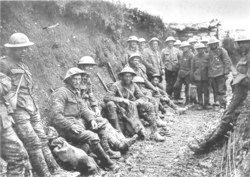
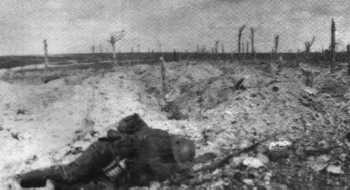
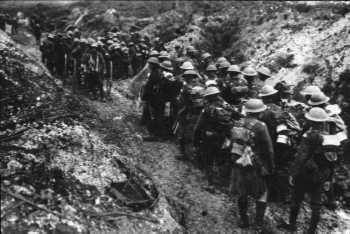
A serial story about WW1 loosely based on true events. The series was published this week in the Pembroke Daily Observer (with different pictures and layout) and was written by Owen Hebbert (My seventeen year old brother in case anyone is wondering.)


"the best piece of fiction writing that this old editor had ever seen" Peter Lapinskie, Managing Editor for The Daily Observer


**********************


Rain fell across the battlefield in a heavy, imposing manner. It came in thick, blinding waves like the wash of a sea. There was no lightning and subsequently no thunder, but the sky was so replete with clouds that were one uninformed one might have thought it night rather than day.


In the trench it was hell. Water ran in cascades down the mud walls and gushed in black, frothing rivers over the trench floor. The men were halfway up to their knees in it. There was almost nowhere that they could go to get away from the rain. Those sitting on benches that lined the walls of the trench had to be resigned to getting not only their shins but also their laps wet as rain continued to pour in and water fell down from directly over them in long, streaming drips. Worse than this was the rats. Hundreds of rodents, fat from months of feeding on human refuse and bodies, were drowning – and not quietly.


“Bloody cold,” James Lawrence said. The young English corporal shuddered and flapped his arms across his chest, sending a spray of muddy water into the face of the private beside him. “Sorry about that, Cramer.” Lawrence apologized, rolling his shoulders miserably.


“Forget it,” Cramer said, wiping his bare hand across his face, a wholly vain effort in hygiene as his hand was muddy and dripping rainwater. Jonathan Cramer was young. Not young like Lawrence was young but much younger still. The boy’s face was acne-ridden and the baby fat that still clung to his cheekbones contrasted strongly with the firm set of his jaw and the deep bags under his eyes. The youth was withdrawn and had always avoided conversation with his fellow-soldiers. Deep within his sunken eyes, and under his youthful face was a secret that his nervous, fretful disposition caused to prey on his mind.


“How old are you Cramer?” Lawrence asked, sucking the rainwater off his lips and spitting it back out into the water swilling around his legs.


“Sixteen,” Cramer said in a low voice. Like hell he was sixteen.


“Really?” Lawrence smiled at the kid. Cramer wasn’t looking at him, but was busily occupied with chewing the corner of his mouth off instead. The boy was obviously younger than that. Fifteen or an older fourteen. The carbine clutched in the youngster’s hands seemed humorously unthreatening. What does a boy like that do when he breaches the trench? They call it cannon fodder.


“Why’s the water doing that?” Cramer asked, sullenly changing the subject.

“Doing what?” Lawrence followed the boy’s gaze and found himself looking at the black flood his feet were immersed in. He really wasn’t all that interested in talking about water in any form right then. He took his peaked cap off and tapped it on his forehead to knock the rain off before pulling it back over his lank black hair.


“It’s sort of swirling there,” Cramer said, pointing.


Something in his voice, an oddly uncharacteristic strain of insistence, made Lawrence look again. The trench was as dark as late dusk and the water was darker than hell, but in the light from the sputtering kerosene lantern carried by a passing sergeant, the surface of the water was somewhat illuminated.

And Lawrence saw it. A single, thin whirlpool with a diameter of about two inches was spinning furiously.


“I’ll be a son-of-a-gun,” Lawrence breathed, leaning closer.


“Where’s it going?” Cramer asked, also leaning forward, impressed that the small nothing that he had chosen to change the subject was so genuinely interesting.


“I don’t know but it’s going steady. Somewhere there’s a big space that’s taking a lot of filling,” Lawrence said thoughtfully.


“But what? There’s no space under this is there? I mean, I wasn’t here for the digging but I don’t think we have anything here. Unless there’s some kind of a storage cell under the boards of the trench floor. Do think that there are supplies getting wet?”


“Storage cells be hanged!” Lawrence snapped. He straightened and rose. “Sergeant Durst!”


The sergeant turned and looked over towards the speaker, raising his lantern to see better which of the soggy, mud-coated men was speaking. He saw Lawrence standing and nodded curtly, not interested in being detained when he could go stand in Major Heath’s small dugout while delivering his report. “You have something of importance to report, Corporal Lawrence?”


“It’s just a small matter, Sir.” Lawrence pointed down at the mysterious indication of a drain.


“What is it man?” Durst demanded, squinting past his lantern at the patch of dark, swirling liquid being indicated.


Lawrence leaned closer down, stabbed his gloved finger at the whirlpool. He didn’t speak, forcing Durst to come closer to inspect.


“Well?” Durst seemed unimpressed. “It’s water. You have some in your ear. If it weren’t there you might have heard that I asked you if you had anything of importance to report.”


“The water’s draining, Sir,” Lawrence said.


“Then it has my blessing. Is that all, Corporal?”


“Sir,” Lawrence said carefully, “the water shouldn’t have anywhere to be draining to.”


“Then it isn’t draining, man! Do you need me to take this apart for you? Idiot!”


“Sir…”


“Shut up!” Richard Durst couldn’t believe that he was having this argument when the major was awaiting the routine report. “Shut up!”


“Yes, Sir,” Lawrence saluted and sat back down on the bench. The warmth from when he had been sitting there before was already washed away by the torrent that crashed loudly down on them from the merciless skies.


Richard Durst turned and started wading away through the trench. The man had been making fun of him. Water draining. The subordinates could be such stupid blighters. Durst was devoted to serving his king, his country and his major. Unadulterated passion for noble causes drove the man and got him recognized and promoted. Men like Lawrence were spiteful over the apparent ease with which such sincerity bought the go-getters favour. Mind, Corporal Lawrence wasn’t a common perpetrator of disrespect. What had the man been thinking? Water draining, indeed. In the trench! What was supposed to be obvious there?


Then it clicked.


“Bloody hell!” The sergeant turned and stared, his expression one of dawning horror, at Lawrence. The corporal nodded, his face softening as he saw that Durst was catching on.


“You!” Durst shot his hand out and pointed to Cramer even as what felt like a full inch of rain fell from the sky and slammed over them, drowning his words out in a whirling scream of wind and water.


“Me?” Cramer pointed to himself, guessing at the intent of Durst’s gesture.


“Tell Major Heath that something of considerable importance has turned up! Go! Run, boy!”


Water crashing up on either side in wings of black, frigid water, the private plowed off through the flooded trench. Durst and Lawrence studied the whirlpool in the light of the lantern. The unspoken fear that they both felt was understood and not stated. There was only one reason that there would be a large space under their trench.


The Germans had tunneled across no man’s land.


****************************


It was about then that the lightning storm started.


“When did you find this, Corporal?” Sergeant Richard Durst asked tersely.


“Just as you were going by, Sir. Private Cramer saw it.” Corporal James Lawrence shivered as rainwater ran down the small of his back.


“Observant. Run and get me two shovels.”


“Yes Sir!” Lawrence turned and ran.


“Bloody observant,” Durst muttered, straightening. He carefully took the glove off his right hand, put it in his pocket and rolled up his right sleeve. Overhead the thunder rumbled and then cracked like a whip. Bending over, Durst submerged his hand in the muddy water and felt about the slimy trench floor. At first, the senses of his hand were so numbed by the cold, the wet and the slimy soil that it didn’t register anything but discomfort. Then he felt it. The harshest point of the current directly over the drain. Water gushed through his fingers and disappeared between a pair of smooth, ice-cold rocks.


“Shovels, Sir!” Corporal Lawrence was back, holding two short trenching shovels.
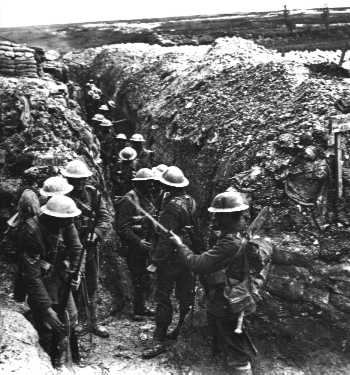


“Sergeant!” The voice was cold with an edge like serrated knife-blade.


It was Major David Heath. Private Jonathon Cramer, who had been dispatched to call for the major was close behind.


“Sir!” Durst turned, straightened and saluted. He was older than Heath, which wasn’t saying much. As so many officers had been killed during the war, young men like Heath were being quickly promoted to dangerous positions of authority.


“You saw fit to have me called for?”


“Sir, yes, Sir.”


“Well speak man! What is it?”


Durst was not a man to quibble. He was frank and came straight to the point. “I think that the Germans have tunneled under our trench.”


Heath was silent for the space of about five seconds. He glanced at the three men standing in a semi-circle in front of him. They were all part of his regiment and he knew them all. He had met Sergeant Durst and Corporal Lawrence on previous occasions and Private Cramer had introduced himself just minutes earlier. The words that had just escaped Durst’s lips were not, however, heard by this limited assembly alone. Whispers and despairing moans erupted from the dozens of men all about them and in an instant word was passed throughout the trench.


“Why?” Heath asked.


“Water is draining at this point,” Durst indicated the whirlpool and lowered his lantern so that the major could see more clearly, “and it isn’t stopping.


“The bloody Germans have tunneled under us!” A frantic voice gasped.


“That’s it!” A mid-aged private rose and began clambering at the trench wall that led away from no-man’s land.


Heath whipped out his revolver and aimed it at the deserter’s head. “Don’t make a move, man, or I shoot your stupid brains out! We don’t know that there’s a tunnel! Dying while running from something that isn’t there would be one hell of a daft way to go!”


For a moment the only noise was the thunder, the rain and the plaintive shrieks of drowning rats. The Webley Mark VI was no gun to fool with. It’s .455 bullet could knock off almost any part of the body and utterly shatter the thickest of bones. Should Heath missed the man’s head and hit a non-vital area, the death would only be slower as a shattered arm or leg in the trenches meant guaranteed gangrene.


Slowly, carefully, the would-be deserter slid back down into the trench.
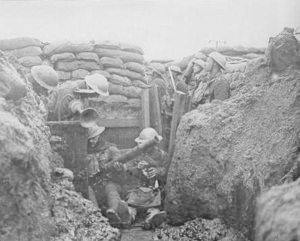


Heath’s attention quickly moved back to the matter of the drain. “Lawrence and Cramer? I want you to ascertain the truth. Dig this drain out. It’s probably nothing, but we mustn’t be caught with our trousers down.” Heath stepped back and allowed the two men to start digging. As he holstered his revolver, he turned to Richard Durst. “Sergeant, you may deliver your routine report to me now.”


Lawrence had been soaked and muddy before he started digging but now he was feeling like a perfect porpoise. Digging mud under a foot of water while heavy rain poured down from above was disgusting, back-breaking work, especially using the short little trenching shovels. However, it was not wholly unsatisfactory. As more and more watery filth was shoveled aside, the intensity of the drain picked up.

“There’s definitely something there,” Heath said thoughtfully, interrupting Durst’s report. “Your shovel, Mr. Cramer?” Heath took the shovel and prodded at a rock exposed by the rushing water. There was a sucking noise and the small boulder disappeared, leaving a gaping hole in what should have been a solid trench floor. The water soon filled the gap, creating a powerful current around the men’s ankles.


“A tunnel,” a nearby soldier breathed.


“I’m just about through,” the private that had tried fleeing said coldly. “I’d rather take a bullet in the head from a Brit than from a Hun. Hell knows when they’ll start pouring up into here with their grenades and knives and guns. We’ll all be crucified. I…”


David Heath turned around so fast that his greatcoat swirled like a cape. “You will die, man, if you say another word.” The young officer’s gun was back out and was aimed, as steady as a pin in a vice, at the private’s face. There was a moment of silence and then the gun was lowered and holstered. Sweat stung Heath’s face.


There were about forty men standing where Major Heath could see them. Faces were somber and unhappy; hands gripped Lee-Enfields as though preparing to shoot down whatever might erupt from the gaping hole in the ground through which water still fell.


“I need a volunteer to lower himself through this hole,” Heath said.


The ranks of gathered men visibly shuddered and many drew back to avoid being mistaken for volunteers.


“Sir?” A quiet, immature voice called.


Lawrence stabbed his shovel into the ground and turned away. He wrapped his arms around his chest and shivered, unable to stand what he knew was coming.


“Yes Mr. Cramer?” Heath said, turning to the boy.


“I’ll do it, Sir.”


“You’re small enough,” Heath said approvingly.


“Permission requested to accompany Private Cramer,” Lawrence asked, his voice harsh.


“Permission granted,” Heath said approvingly.


The two men dropped into the tunnel and a lantern was lowered to them.


For about five minutes there was total silence save the rumble of thunder.


“Major! There’s something down here you should see!”


Heath raised his eyebrows and climbed down into the tunnel as well. For a moment he couldn’t see anything save the harsh glare of the lantern that Cramer was holding. Then he saw it. Piled high at the end of the tunnel was a mound about three feet high of wired dynamite.


Heath reached over and extinguished the lantern that Cramer was holding. “Bleeding hell,” he whispered.


*************************


Back in the trench the suspense was incredible. Neither Lawrence or Cramer dared tell what they had seen in the darkness of the tunnel below their feet and Major David Heath seemed disinclined to divulge the information himself. The major sat on a bench, smoking a cigarette with a feverish intensity. It was still raining and the lightning storm was directly over the battlefield, deafening and blinding the men as it struck down on the metal-littered no-man’s land.


After about ten minutes of dangerous quiet, Heath rose and straightened. He looked at the thirty or so men that were sitting on benches where he could see them (the zigzagged nature of the trench only allowed him to see so far). “Men,” Heath said, “pay attention!” Lightning flashed and water slammed into the young officer as he began talking. “Circumstances have arisen that call for a dangerous mission to be executed. Even as we speak, the enemy has a sizeable stash of wired dynamite stowed under our trench. That is what their tunnel was for. I have decided that we must physically carry it back under no man’s land. My reasons for arriving at this conclusion are for the good of this war. Now there will need to be four men so that the dynamite will be transported with as much safety as can be afforded.”


“Right!” The middle-aged private who had attempted to desert earlier stood and waved a scornful hand in the major’s direction. “Which four of us want to go into that bloody hell-hole and carry dynamite around in the dark? And you know another thing? The Germans have those bombs wired and there’s no way to know when they’ll decide to shove a plunger down and scatter your insides from here to freakin’ Brandenburg!”


“What you say is true,” Heath said evenly, “and whoever volunteers should know that.”


The private sat back down as did anybody else that had been standing. Volunteers appeared to be scarce.


“However,” Heath continued, “I think that whoever volunteers should also know that I’ll be down there with them. I only need three volunteers. I will be leading them.” The young officer stood straight as a ramrod, his youthful, unshaven face dripping rainwater and his gloved hands clasped behind his back.


This was different. Here was a leader who, in the most miserable, dark, freakishly-horrible conditions was still willing to stand by principles of loyalty and self-sacrifice.


“What…” The private pointed an uncertain forefinger at Heath. “You’re going to go down there and carry the dynamite?”


“We mustn’t waste time with talk,” Heath said stiffly. “Have I any volunteers?”


“I!” Sergeant Richard Durst stepped forward.


“I!” Private Jonathon Cramer offered his services.


“Then I, too!” Corporal James Lawrence came to stand beside the boy.


“That’s three volunteers. We’ll need four trench-clubs. Would somebody…”


The rebellious private was already on his feet and running for the nearest weapons dugout.


Armed with their clubs which swung from their wrists by leather thongs and with the assistance of two electric lights, the four men dropped into the tunnel, leaving the cold, wet, loud, dying world above them and entering a hell beneath hell. They loaded all the dynamite stacked there into delicate armloads of death.


“All right!” Heath said, “now we must advance down the tunnel at the same pace, or else the cord will pull and the dynamite might go off. Sergeant Durst and Corporal Lawrence, you two are in charge of the lights. Hold them in your mouths and whatever you do, don’t drop them on your load of firecrackers or there’ll be a big crater in the middle of no-man’s land. Now ever so carefully, forward!”


The journey through the tunnel was one that is hard to describe. After the men had walked for about ten yards the floor under their feet became flooded and they were gingerly creeping over slippery boulders hidden under water that was sometimes two feet deep. The electric lights were little good, especially after Durst dropped his in the water. For twenty yards the floor remained flooded and then it rose sharply. The men emerged from the water to step into a bank of ankle-deep mud.


“This is suicide,” Cramer murmured under his breath. The boy’s every step was an act of great labour. His boots stuck in the mud and had to be dragged out with great effort. He was afraid of fooling about lest he drop his dynamite, and if he slowed up too much, the wires on the dynamite might jerk. After about five yards of negotiating the mud, he lost one of his boots and, finding that this made it easier, he quickly allowed the other to slip off as well. He would pick them back up on the return trip – provided that there was one.


“Sir…” Durst, who had been especially silent since he had lost his light, spoke for the first time. He struggled with his boot for a moment and then continued. “…Do you intend to leave this mess under the Germans’ trench?”


“Can you think of a better place to leave it?” Heath asked with a small smile that was lost in the dark.


“No, Sir,” Durst said quickly. He believed in his officer no matter what the young hothead might be doing. It was obvious that besides being gallant and selfless, this Heath fellow had a strong sense of practical irony.


They continued on in silence. For about fifty yards, the tunnel floor was actually dry. It was rough and covered in clods and stones, but dry nonetheless. It was on this ground that Cramer quickly regretted abandoning his boots. The boy’s feet were soon bruised and bleeding. The torture was increased significantly when the floor banked sharply and the four men were walking through water once more. The muddy swill stung at Cramer’s cut feet almost as bad as his own sweat had, but it was the sharp, gravel-like deposits in the water that made his every step agony.


Then they had to walk through more mud for about ten yards.


Suddenly Major Heath, who had conducted the entire journey without a single complaint, let out a quiet laugh. “Don’t speak too loudly, men, but I think that our little jaunt is at an end.”


Sure enough, in the dimming light cast by the electric torch, the end of the tunnel could be seen. The Germans had apparently boarded over the hole that they had used to dig the tunnel, as no light came down from above save a few rays that wormed between the planks of the cover. German voices and the sounds of thunder, rain, rats and the like could be heard. Water poured down through the slats of the boards and all four men quickly realized how relieving it had been not to have rain streaming down on them from above.


“Gently now!” Heath whispered. Slowly, tenderly, he placed his load of explosives down, careful not to put it under the drip. The other three followed suit. Heath made sure that the dynamite was still wired properly and, having given the mound a loving pat, drew back.


He smiled thoughtfully and said: “Mission accomplished.”


******************************


They all stepped back from the stack of wired dynamite, staring at it in horrified fascination. The Germans had tunneled across no man’s land and deposited this mother lode of explosives under the British trench, but it had been discovered. Major David Heath, Sergeant Richard Durst, Corporal James Lawrence and Private Jonathon Cramer had just finished carrying the deadly sticks back through the tunnel and placing them under the Germans’ trench.


“Shall we, gentlemen?” Major Heath waved an inviting hand towards the tunnel that led back to safety.


No second bidding was required. There was no telling when a German engineer might decide to depress the plunger of his remote detonator. The four men started running.


Private Cramer had abandoned his boots on their first trip through the tunnel and his bare feet, cut and stinging slowed him as he tried to keep up with the older soldiers. He was now carrying the dying electric lamp and its beam wavered dramatically as he stumbled and pitched through the tunnel.


Major Heath’s face was expressionless. His feet pounded steadily into the dirt, the mud, the water; his teeth sank into his cheeks as he tried to calm the flow of emotion that he felt. He felt fear, satisfaction, excitement, stress, but most of all, he felt his responsibility. The lives of these men and the leadership of his regiment back in the trench were his responsibilities.


They were about half-way across no man’s land when the dynamite went off. To the four men in the tunnel it sounded as though a large building had been picked up and dropped on another large building. Worst of all, it felt as though they were in the latter large building when it happened. For a brief instant a flash of painful light lit up the mud the men were standing in and then disappeared as the tunnel started caving in.


“Hang,” Cramer said softly.


“Run!” Heath’s order was scarcely audible as all the men’s ears had popped, but then it wasn’t entirely necessary anyway.


They ran. The electric light was gone – dropped, dead, forgotten. Slapping at the muddy tunnel walls with their hands, they felt their way through the darkness. Clods of earth and stones rained down on them from the tunnel ceiling.


“Who’s there?” Heath shouted as he ran. “Can anyone hear me?”


The rumbling of the tunnel collapsing was loud but above it came the affirmative shouts of Heath’s men.

“I’m right behind you, Sir!” That was loyal Durst.


“Here, Sir!” That was Lawrence.


“I’m coming!” This last voice, shouted out in a desperate, agonized tone of determination was that of Cramer.


“Keep yelling!” Heath shouted. “We mustn’t lose one-another!”
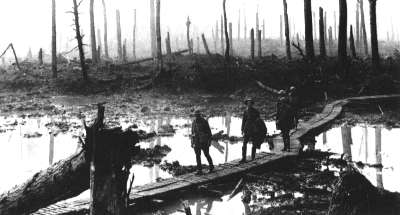


And so the men ran, shouting to each other and trying not to fall as they crossed the mud, the water and the short stretch of hard, dry, gravely ground that separated the long stretches of water. It was when they were about three-quarters of the way through the tunnel that the ceiling started raining down on them in earnest. Entire slabs the length of dining tables fell down amid showers of boulders and mud. Dirt filled the men’s eyes, ears, mouths, clothing and boots.


“Don’t stop yelling!” Heath roared above the colossal crashing of raining earth. “Yell your names!”

“Lawrence!” Corporal Lawrence cried.


“Durst!”


“Heath!” That was the major. Though they could barely hear him, his men thought his voice to have lost none of its authority and assurance.


“Cramer!” The boy private shouted.


“Lawrence!”


“Durst!”


“Heath!”


“I can see light!” Cramer shouted.


It was true. The end of the tunnel, heralded by rays of sunlight that streamed into the tunnel from the British trench above, was less than fifteen yards ahead of them. The sight gave the men courage and new energy. Shouting and laughing, ducking their heads to avoid the falling ceiling over them they raced forward.

Suddenly Heath heard a shriek and with safety no more than ten feet away, he froze. Every nerve in his body was stiff as a rod of iron. His ears were tingling as he tried to listen for the sound to repeat itself. He turned around, looking down the way he had come. It was hell in there. Behind him he could hear Durst and Lawrence being pulled up into the trench. Into safety.


Then he heard it again. His lips moved, disbelievingly mouthing a single name. Then he screamed it, tearing the breath from his aching lungs like a knife from a wound. “Cramer!”


He ran back into the darkness. Into the hell under hell. He couldn’t see a bloody thing. He ran to where he thought he had last heard Cramer’s voice. There was nothing there.


“Cramer!” He shouted. Suddenly his foot slipped, sending him into a deep puddle. He felt a stone scraping the skin off his knee as he landed. A clod of earth fell over his shoulder and knocked him down on his face. Pebbles and earth sprinkled across his back. He was going to be buried alive if he didn’t move. Fear gripped his heart and he struggled into a sitting position. From there he rose and threw himself against the wall where he was out of the way of most of the falling earth. “Speak, Cramer!” His nose was broken from hitting his face on the ground and he could feel that his gum had been cut.


“Help!” It was a small, pitiful cry, but even in the darkness Heath could locate its source. The boy was at his feet.


Heath felt about and found that a boulder, no less than two feet in diameter had trapped the boy’s legs to the ground, not to mention likely breaking one or both of them. Kneeling beside the boy, the major struggled to free him, pulling at the stone with all his might, trying to ignore the protesting of his injured shoulder. For a moment nothing happened. Then the stone shifted and finally slid off. Cramer was screaming in agony, but Heath ignored it as he lifted the boy out of the mud.


Cradling the private in his arms like a baby, Heath – for the last time – ran. His lungs felt as though somebody had filled them with methane and struck a match. His head was spinning with pain and he could scarcely focus on the light at the end of the tunnel.


Suddenly he was there. Lawrence and Durst had just dropped back into the tunnel to come rescue him and they caught Heath and the boy.


“Major, I’m so sorry! I thought you were right behind…”


But Heath wasn’t listening. He could feel himself collapse and then felt himself lifted through the hole from the tunnel into the trench above. He could feel wind and rain on his cheeks and fresh air in his lungs. He was safe, his men were safe, the trench was safe and he had done his duty.


In the middle of a filthy, rat-infested trench, Major David Heath felt safe. As shells squealed overhead and machinegun bullets rattled through the heavy air of no man’s land, he fell into an exhausted sleep.